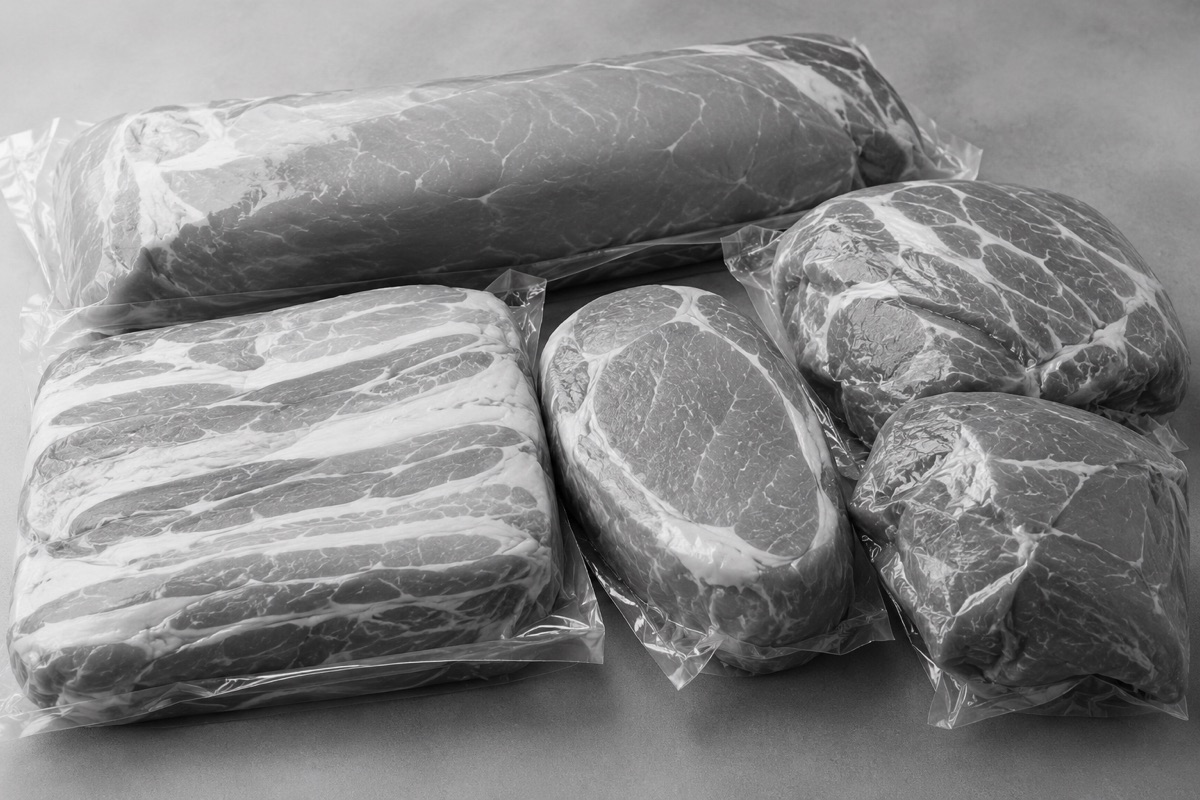
For Japan's pork industry, and those who trade with it

Global pork market data, aggregated and made visible

Prices, trade, supply and animal-health data from the major exporting countries, together with Japan's imports and domestic market, in one dashboard. A platform that reorganizes official statistics into views built for the trade.

What's covered

Japan's market, and global supply data

From Japan's import statistics and domestic market to overseas trade and supply, hog prices, cutout and primal cuts, herd and slaughter, and animal disease. Data can also be viewed by country.

Japan

JapanFree · No sign-up

Imports and the domestic market: trade statistics, wholesale and retail, processed products and household spending.

Global

GlobalFree · No sign-up

Global supply, prices and animal health: data across the major exporting countries (the US, the EU, Canada, Mexico and Brazil).

By theme
By country
Coverage
30+
Data sources (official statistics and primary sources in each country)
Frequency
Daily
Updated frequently, including indicators published daily such as US prices and slaughter
History
10y+
Key indicators go back more than 10 years
About

Who's behind PorkLens

PorkLens's choice of data and its interpretation are based on the experience and knowledge the founder has built up working in the pork business.

The founder has worked in sourcing from North America, Latin America and Europe, in production and quality control, and in market analysis. Including postings overseas, the founder has regularly visited plants and processing sites in Japan and abroad, and through close dialogue with local packers and producers has come to know each origin's specifications and quality, and the indicators and market views that matter locally.

Combining this hands-on experience from upstream to downstream with first-hand information from the field and analysis of official data, PorkLens organizes overseas information into a form that is easy to use in sourcing, sales and processing in Japan.

Open the dashboards

All dashboards are free to view without sign-up. The weekly report is available free during the beta after sign-up.

Pork industry news

Posts are written in Japanese and translated into English by AI.

Follow on X
Japan

Japan's pork carcass wholesale prices up about 2% last week

Japan's pork carcass wholesale prices rose about 2% last week from the week before, on average across the major markets. Tokyo briefly touched ¥602/kg on the 6th, but prices stayed in the mid-to-high ¥500s/kg range they have held since late August.

View on X
Brazil

Brazil's soybean production expected to hit a record in 2026/27

Brazil's soybean production for 2026/27 is expected to reach a record. Consultancy Safras & Mercado raised its forecast, expecting planted area to expand, led by the Center-West. With hog prices still weak in the main pork exporters (the US, the EU and Brazil), this is news that points to lower feed costs. Production is forecast at 181.84 million t, up 2% from the previous season, and planted area at 49.54 million ha, up 2.1%. Yield is expected to dip slightly to 3,689 kg per hectare, so the increase comes from the larger area. However, inputs such as fertilizer may be held back on newly planted land, which could limit yield gains. The actual crop will depend on the weather from November to January.

View on X
JapanQuote

CSF outbreak in Shibukawa, Gunma is the third case under Japan's new selective culling rule

Japan previously culled every pig on farms with a CSF (classical swine fever) outbreak, but an amendment to the Domestic Animal Infectious Diseases Control Act that took effect on May 19 this year now allows "selective culling" of only the pigs that need to be culled. It applies in the vaccination zone covering 46 prefectures (all except Hokkaido), and pigs without symptoms that have acquired immunity through vaccination are excluded from culling. The outbreak in Shibukawa, Gunma Prefecture, is the third case nationwide where the rule has been applied, and the pigs to be culled will be selected from about 2,800 head. The prefecture also had an outbreak in February, when all of about 2,000 pigs were culled. As the farm is inside the vaccination zone, no movement or shipment restrictions are imposed on surrounding farms.

JapanQuote

CSF confirmed in wild boar in Chiba for the first time; only three prefectures remain without a case

With this, CSF (classical swine fever) has been confirmed in wild boar in 44 prefectures, leaving only Hokkaido, Oita and Okinawa without a confirmed case. Positive wild boar since 2018 total more than 10,000. In Chiba, farmed pigs came first: an outbreak occurred at a farm in Asahi in April last year. Testing wild boar does not always detect the spread of infection first. The prefecture will inspect farms within 10 km of where the boar were caught and distribute oral vaccine bait in the surrounding area. Vaccination of farmed pigs has continued since October 2019.

USドミニカ共和国

US pork exports to the Dominican Republic up 23% in Jan–Aug

The Dominican Republic, where ASF (African swine fever) has cut domestic production, has become a major importer of US pork. US exports there (HS 02.03) surged from 38,000 t in 2020 to 94,000 t in 2023 and held around 90,000 t in 2024 and 2025. January–August this year: 68,000 t, up 23% year on year. Since ASF was confirmed in July 2021, the first case in the Americas in about 40 years, US pork has been making up for the lost domestic production. Frozen cuts lead the growth, with bone-in hams and shoulders at four times the 2021 level. (Chart: US pork exports to the Dominican Republic (monthly), PorkLens dashboard)

View on X
USドミニカ共和国

US pork exports to the Dominican Republic up 23% in January–August

The Dominican Republic, where domestic production has fallen because of ASF (African swine fever), has become a major importer of US pork. US exports to the country (HS 02.03) surged from 38,000 t in 2020 to 94,000 t in 2023, and stayed around 90,000 t in 2024 and 2025. In January–August this year they rose 23% year on year to 68,000 t. Since ASF was confirmed there in July 2021, the first case in the Americas in about 40 years, US pork has been making up for the decline in domestic production. Frozen cuts have grown the most, with bone-in hams and shoulders expanding to four times their 2021 level.

View on X
ベネズエラ

USDA forecasts Venezuela's pork production at 130,000 t

The USDA forecasts Venezuela's 2026 pork production at 130,000 t, up 4% from the previous year. Production continues to recover after falling from 197,000 t in 2012 to 22,000 t in 2020. Per capita annual consumption has also recovered, from 0.8 kg in 2020 to 4.7 kg in 2025. Imports are expected to stay at just 1,700 t, with most demand met by domestic production.

View on X
ArgentinaBrazil

Argentina's pork imports in nine months match all of 2025

Argentina's pork imports exceeded 50,000 t in January–September, matching the total for all of 2025. Most of it comes from Brazil, and monthly import volume is approaching the record set in 1999. Brazilian hog prices remain low at around $1 per kg, and the exchange rate is also working in favor of imports. Consultant Juan Uccelli pointed out that the $120 million (about ¥19 billion) spent on imports could have brought in 24,000 sows, equivalent to 100,000 t of production a year. He also noted that bondiola (collar/butt) imported at about 3,000 pesos sells in stores for 9,000 pesos, so the benefit of cheap imports is not reaching consumers.

View on X
Germany

Long straw in farrowing pens cuts piglet crushing risk by 46%

Adding long straw to farrowing pens lowered the risk of piglets being crushed within three days of birth by 46%. The trial, run by Kiel University in Germany and others, compared 221 farrowings by 141 sows over one year in pens where sows are confined only around farrowing. Three materials were tested: long, unchopped barley straw; grass hay; and jute sacks (attached to the pen bars as a minimal material), each at 120 grams a day. The share of piglets crushed within three days of birth was 3.5% with straw and 6.5% with jute sacks. With hay, the difference was not clear. Sows in the straw group changed posture about 28% less often, and every 10 additional posture changes made crushing about 8% more likely. Nesting material appears to have calmed the sows, which led to fewer crushing deaths.

View on X
Brazil

Wild boar spreading across Brazil's pig-farming regions, raising disease concerns

Wild boar are spreading in Brazil's main pig-farming regions, raising concerns that they could bring disease to pigs. Biologists warn that the issue is getting too little attention, pointing to Catalonia in Spain, where ASF (African swine fever) in wild boar caused heavy losses to pig farming. According to the Ministry of Agriculture and Livestock, wild boar are most widespread in Paraná and Santa Catarina, which are also the top two states by pig inventory. Biologists propose protecting areas that are still free of wild boar and keeping them free zone by zone, as is done for foot-and-mouth disease (FMD).

View on X
EU

European Commission adopts common emission rules for pig and poultry farms, applying from 2030

The European Commission has adopted common EU operating rules (UCOL) for emissions from pig and poultry farming. They cover ammonia, nitrogen and phosphorus, and will apply in stages from 2030 to 2032 to larger farms (about 30% of the EU total). The rules replace differing national regulations with common minimum standards and do not require the same permits as industrial installations. They focus on operational measures such as manure handling, feed nutrition design and housing design, and farmers can choose which techniques to use as long as they meet the standards. The Commission said it prioritized changes to feed as a measure that places only a light burden on existing and smaller farms.

View on X
Netherlands

Vion to sell a Dutch slaughterhouse, affecting about 300 workers

Vion, the large Dutch-based packer, said it plans to sell its slaughterhouse in Apeldoorn in its home country. Pig slaughter will move to its other plants in the Netherlands, and if the sale goes smoothly, the transfer will be completed within the year. About 300 people are affected. The Dutch pig inventory keeps falling, partly because of government policy, leaving Vion with spare processing capacity. At the end of September, Vion said it would give up a slaughterhouse in southern Germany and shift its focus to the Benelux. Now it is also scaling down processing in its home country.

View on X
US

USDA raises US corn yield; production set to be second largest on record

Both the US corn crop outlook and stocks came in well above expectations, and prices fell sharply. In its October supply and demand estimates, USDA raised this year's US corn yield to 181.2 bushels per acre. The 2.7-bushel increase from September is the largest September-to-October upward revision since 2005. Production will be the second largest on record. Ending stocks were also raised from the September estimate. Chicago corn futures (December contract) fell 20.5 cents to $4.7975. Combined with the September 30 stocks report, prices dropped about 42 cents over two trading days to an eight-week low. The yield is an estimate as of October 1, and harvest is only 15% complete in Nebraska and 7% in Iowa. Some believe three weeks of heavy rain in some areas are not yet fully reflected.

US

US pork cutout falls to its lowest since April 2023

The US pork cutout has dropped to its lowest since April 2023. For this point in October it is more than 10% below each of the past three years. Slaughter is running at a high pace and carcass weights are above year-ago levels, so there is plenty of pork on the market. Domestic demand, meanwhile, stays soft, with consumers picking chicken over pork. CME lean hog futures saw the October contract set a life-of-contract low on Wednesday, settling at 76.925 cents/lb. (Chart: US pork carcass cutout, year-on-year comparison, PorkLens dashboard)

View on X
US

53% of US pig diagnoses involve more than one pathogen

In US pig disease diagnoses, 53% of cases with a confirmed cause involved two or more pathogens. In other words, in more than half of cases, finding one pathogen is not enough to explain the symptoms. The figure comes from a count of 45,310 cases submitted to the Iowa State University Veterinary Diagnostic Laboratory in 2020–25. In one case, nine pathogens were listed. The top five combinations all paired PRRS (porcine reproductive and respiratory syndrome) virus with another pathogen; the most common was PRRS virus with Streptococcus suis. Of the cases with multiple pathogens, 82% involved the respiratory system, and they were concentrated in pigs between weaning and market.

View on X
EU

EU spring pig inventory down 1.0% in 11 countries; sows steady

In the EU spring pig survey, the pig inventory in the 11 countries that have published results fell 1.0% from a year earlier. Sow numbers were nearly unchanged, so the breeding herd has not shrunk. Declines varied widely by country, with the Netherlands down 6.8%. Only Denmark increased, but its figure includes pigs that were backed up on farms awaiting slaughter at the time of the survey. For sows, Spain, a leading supplier to Japan, was up 2.6%, while Denmark, after a long run of increases, turned to a decline.

View on X
US

US pork cutout falls to lowest since April 2023

The US pork cutout has fallen to its lowest level since April 2023. For this time of year, it is more than 10% below each of the past three years. Slaughter remains at a high pace and carcass weights are above last year, so a large volume of pork is coming onto the market. Meanwhile, domestic demand is weak, with consumers reportedly choosing chicken over pork. The October CME lean hog futures contract hit a contract low on the 7th, settling at 76.925 cents/lb.

View on X
UK

England's breeding herd up 2.8%, while sow slaughter rises 9.7%

England's breeding pig herd stood at 322,000 head in June, up 2.8% from a year earlier. However, UK slaughter of sows and boars rose 9.7% in January–August, and in August alone it was up 21%. Sow slaughter rises when the breeding herd is being reduced. So the June survey reflects a period of expansion, and since then the move to cut sows has gained pace. The survey is sample-based, and the 322,000-head figure has a margin of plus or minus 13,300 head. UK pork production rose 4.9% in the 12 months to August. Not only head numbers but also carcass weights increased, with the August average approaching 90 kg.

View on X
Germany

ASF found in Germany's Barnim district for the first time in four and a half years

ASF (African swine fever) has been confirmed in one wild boar in Barnim district, Brandenburg, Germany. It is the first case in the district in four and a half years, bringing the number of districts in the state with confirmed cases to two. It was found inside the high-risk zone east of the dike along the Oder River, which forms the border with Poland. The state has fenced along the river to keep infected wild boar from leaving the zone. The state had gone more than a year without a new case, but the disease returned in neighboring Uckermark district in July, where cases have risen to 42. Despite ongoing control measures, the virus persists in the border area.

USJapan

US pork exports to Japan fall below year-ago levels for the first time this year

US pork exports to Japan fell below year-ago levels in August for the first time this year. Volume was down 3% y/y, while value dropped 9% as export prices declined. Chilled and frozen muscle cuts were both down about 5%. For January–August, shipments to Japan are still more than 10% above last year. Across all destinations, US exports of chilled and frozen pork have been below year-ago levels for three straight months since June. (Charts: US exports, year on year by HS category and destination (August) / monthly total, all destinations (year on year), PorkLens dashboard)

View on X
Spain

Spain's Aragon is the EU's largest pig region with 9.4 million head

The EU region with the largest pig inventory is Aragon in Spain, with 9.4 million head as of December 2025. Catalonia was second with 8.3 million, and Brittany in France third with 6.4 million. Aragon and Catalonia together account for 52.7% of Spain's total. Germany is also concentrated, with two states accounting for 60.7%. In Catalonia, the second-ranked region, ASF (African swine fever) was found last November.

View on X
Canada

Alberta to ban pig-derived feed ingredients for pigs from 2027

From January 2027, pig-derived feed ingredients can no longer be fed to pigs in Alberta, Canada. The ban covers meat and bone meal containing pig bones, and plasma and serum made by spray-drying pig blood. Plasma has been used in feed for newly weaned piglets since the late 1980s, as it improves weight gain and reduces post-weaning diarrhea. In response to producers concerned about disease entering through feed, the provincial producer organization added the ban as a province-specific requirement to the national on-farm certification (CPE) needed to ship pigs to federally inspected slaughter plants.

View on X
US

US pork exports to Japan fall year on year in August for the first time this year

US pork exports to Japan fell below the previous year's level in August for the first time this year. Volume was down 3% year on year, but value fell more sharply, by 9%, as export unit prices declined. Chilled and frozen cuts were both down around 5%. For January–August, exports to Japan are still more than 10% above last year. Across all destinations, exports of chilled and frozen pork have been below year-earlier levels for three straight months since June.

View on X
Denmark

Danish Crown merges seven of its eight business units

Danish Crown, Denmark's largest packer, is merging seven of its eight business units. It will integrate production, sales and product development, abolish the head of each business unit, and centralize decision-making at headquarters. The aim is to raise the share of meat delivered by its member farmers that it processes into products such as bacon at its own plants and sells, from about 25% by weight now to 50% by the end of 2030. It will scale back its strategy of expanding around the world and shift its focus to Europe.

View on X
Brazil

Brazil's September pork exports to Japan up 39%, now the No. 2 destination

Brazil's pork exports in September were 135,000 t, down 11% year on year, but exports to Japan rose 38.9% to 15,916 t, moving Japan up to second among destinations. Shipments to the Philippines, the largest destination, halved, while exports to Japan, Chile and Argentina grew. Cumulative January–September exports were 1.19 million t, up 6.2% from the same period last year. However, value rose only 1.3%, as average unit prices continue to fall.

View on X
EU

ASF in Europe: wild boar cases fall, domestic pig outbreaks flat

Europe recorded 7,455 ASF (African swine fever) outbreaks in January–September this year, 16.6% fewer than in the same period last year. The decline was in wild boar: Poland fell from 2,720 to 1,721 cases, and Germany from 1,840 to 719. Outbreaks in domestic pigs, however, went from 732 to 733, with no decrease at all. About three-quarters were in Romania and Serbia, and Croatia rose from 43 to 130. Among wild boar, cases also increased in Italy and Lithuania.

US

PED virus found on pig trucks even after disinfection, US university study shows

Small amounts of infectious PED (porcine epidemic diarrhea) virus remained on pig transport trucks even after washing and disinfection. North Carolina State University in the US confirmed this by inoculating piglets with samples taken from trucks at truck washes. Piglets became infected even with post-disinfection samples, though most recovered. The research team recommends continuing disinfection because it reduces the virus, and urges that biosecurity steps not be skipped even for disinfected trucks.

View on X
USQuote

US executive order defers diesel tax on dyed diesel used on public roads until year-end

US President Trump signed an executive order that defers, until year-end, payment of the federal diesel tax (24.4 cents per gallon) even when dyed diesel, sold tax-free for off-road vehicles such as farm machinery, is used on public roads. It applies to farmers and trucking companies. Chilled pork is trucked inland to ports, so part of the fuel cost will ease. However, diesel is in the $6-a-gallon range, so the tax accounts for just under 4%.

View on X

ASF threatens 12 Asian wild pig species with extinction

Twelve wild pig species native to Asia are at risk of extinction from ASF (African swine fever). These species had never been exposed to the ASF virus before, and where the virus has arrived, almost all of them have died. On the International Union for Conservation of Nature (IUCN) Red List, five of them are classified as Critically Endangered, the highest risk category, and one as Endangered. Infection has also reached the babirusa, found only on Indonesia's Sulawesi island.

Marine fuel prices up about three-quarters since the Iran war began

Marine fuel prices have risen by about three-quarters since the US and Iran went to war at the end of February. In Singapore, the largest bunkering port, the main low-sulfur fuel rose from $509 per tonne before the war to $886. Prices have eased from their mid-March high but have not returned to pre-war levels, and have been rising again in recent weeks. Though not as sharply as tanker rates, container shipping rates are also more than double their pre-war levels. Higher fuel costs are added to freight rates as fuel surcharges, raising the cost of shipping frozen and chilled pork by sea.

View on X
Brazil

Brazil's soybean crushing capacity up 13% to 86.4 million t a year

Brazil's soybean crushing capacity rose 13% this year to 86.4 million t a year, driven by growing demand for soybean oil, a biodiesel feedstock, and soybean meal, used in feed. This year's crush is expected to reach a record 63.5 million t. Crushing soybeans produces oil and meal at the same time, so if crushing increases for biodiesel, the supply of soybean meal for feed also rises, putting downward pressure on prices.

US

Court sends Smithfield's new plant permit back to the city

A court found that the city of Sioux Falls, South Dakota, erred in approving US-based Smithfield's planned pig slaughter and processing plant there without conditions on odor, groundwater and fire safety, and ordered the city council to review the permit again. The new plant was announced in February as the relocation site for Smithfield's existing plant, which has operated in the city for more than 100 years.

View on X
VietnamQuote

Vietnam's pork imports up 27%, average unit price down 38%

In Vietnam, imported pork keeps rising even as domestic hog prices have fallen to their lowest this year. →Vietnam's meat imports totaled $2.04 billion from January to September 15. Pork (chilled and frozen) import volume rose 27% year on year in January–July, while the average unit price fell 38% to $1.64 per kg. Vietnam is a market with a particularly strong tendency to "just buy from whichever country is cheapest"

SpainQuote

Spanish hog prices fall for third week; farmers and packers both in the red

In Spain, where ASF (African swine fever) has limited export destinations, both pig farmers and packers are losing money. →Spanish hog prices fell 2 euro cents per kg, a third straight weekly decline, though the drop was smaller than in the previous two weeks (2.5 euro cents). Pig market weights, which fell in the summer heat, are slow to recover, while feed, fuel and transport costs have risen, swelling costs for both farmers and packers. Restrictions on exports outside the EU from Spain and Germany, flat demand in Southeast Asia and a slump in China have combined to slow pork sales within Europe.

US

$1.64 million for US research to reduce pig deaths

$1.64 million (about ¥260 million) will go to research to reduce pig deaths in the US. It is funded by the Foundation for Food & Agriculture Research (FFAR) and the Pork Checkoff, a pork industry organization funded by producer contributions, among others, and is being carried out by Iowa State University and Kansas State University. Research topics include the link between routine herd-wide antimicrobial use and sow mortality, barn hygiene, and nutrition for sows in late gestation. The Pork Checkoff estimates that a 1% increase in pig livability would add the equivalent of 1.2 million head a year to US pork supply, and that the same volume could be produced with 46,000 fewer sows.

View on X
EU

EU feed industry calls for feed supply contingency plan

FEFAC, the association of EU compound feed manufacturers, has called on the EU to draw up emergency measures by the end of 2026, warning that feed ingredients could run short this season. Summer drought has reduced the EU's grain crop, and Ukrainian corn and oilseed meals shipped via the Black Sea have also been disrupted. In addition, enforcement of the EU Deforestation Regulation (EUDR) will require proof that imported soybean meal and other products are deforestation-free, making sourcing more difficult.

View on X
US

US belly cutout at lowest for week 40 since 2018

The US belly cutout fell nearly 40% over two weeks in September. Last week's average was the lowest for week 40 since 2018. Over the same two weeks, the overall carcass cutout fell just under 10%, so the drop in bellies stands out.

View on X

FAO: September international corn prices highest in more than three years

The FAO Food Price Index for September reached its highest level for food overall since November 2022. International corn prices in particular averaged 5.6% higher in September than in the previous month, the highest in more than three years. US yields came in below expectations, Brazil's export capacity has shrunk, and shipments via the Black Sea have been disrupted. International pork prices, on the other hand, fell. Supplies are ample in major exporters, and in the EU, pig growth that slowed in the summer heat is recovering.

View on X
Japan

Japan's pork carcass wholesale prices about 9% lower in September than in August

Japan's pork carcass wholesale prices edged up about 2% last week from the week before, according to MAFF's daily data. Tokyo briefly touched ¥600/kg on Tuesday, but prices stayed in the mid-to-high ¥500s/kg range they have held since late August. (Charts: Pork carcass wholesale prices in Tokyo, daily, and by grade, monthly — PorkLens dashboard)

View on X
Japan

Japan's pork carcass wholesale prices about 9% lower in September than in August

Japan's pork carcass wholesale prices averaged about 9% lower in September than in August, according to MAFF's daily data. Last week they stayed in the mid-to-high ¥500s/kg, the range they have held since late August. (Charts: Pork carcass wholesale prices in Tokyo, daily, and by grade, monthly — PorkLens dashboard)

View on X
USEUJapan

PorkLens Weekly Market Report, October 2026, Week 1 is out

PorkLens Weekly Market Report, October 2026, Week 1 is out. This week's key points • US: Hog prices fall for a ninth straight week to the lowest since February 2024 • US: Cash corn -4% w/w after quarterly Grain Stocks come in above expectations • EU: Pig prices (carcass-weight basis) fall again to the lowest since early August • Japan: August pork imports +8% y/y — Brazil +71%, with further increases expected • Japan: Pork carcass wholesale price -1% vs 5-year average in August, nearing normal levels Full issue for registered users (free beta). Link in reply.

View on X
JapanBrazil

Japan's pork imports up 8% in August, led by Brazil

Japan's pork imports rose 8% year on year in August, led by Brazil. Brazilian pork was up about 70%, making Brazil Japan's third-largest supplier so far this year, behind Canada and the US. In frozen pork, Brazil, Denmark and the US have filled the gap left by Spain, whose pork remains largely suspended from Japan after its African swine fever outbreak. Chilled imports rose from Canada and Mexico. More Brazilian pork is on the way: Brazil's export data show shipments to Japan exceeding Japan's recorded imports every month from June to August, and cargo takes one to two months to arrive. (Charts: Japan's pork imports by major origin, year-on-year, chilled and frozen — PorkLens dashboard. Table: Japan pork imports by exporter — PorkLens Weekly Market Report, October 2026, Week 1)

View on X
ArgentinaBrazil

Smuggling of Brazilian pork rising in Argentine border province

Smuggling of Brazilian pork is increasing in Misiones, the Argentine province along the border with Brazil. According to a local pig-farming and meat-processing cooperative, the impact was small at the start of the year, but now even half carcasses are coming in. The background is the fall in Brazilian hog prices. In dollar terms they have dropped about 40% since January, and Argentine hog prices have been more than 50% above Brazil's since May. Legal imports have also increased and are reportedly weighing on prices in Argentina.

View on X
JapanBrazil

Japan's August pork imports: Brazilian pork up 70% year on year

Japan's pork imports in August were 8% higher than a year earlier, led by Brazilian pork. Imports from Brazil were up 70% from a year earlier, making Brazil Japan's third-largest supplier in January–August, after Canada and the US. In frozen pork, Brazil, Denmark, the US and others are filling the gap left by lower volumes from Spain, where imports remain suspended because of ASF (African swine fever). In chilled pork, Canada and Mexico increased. Brazilian pork is expected to keep rising. Brazil's exports to Japan exceeded Japan's import volume every month from June to August, and those shipments, which take one to two months by sea, have yet to arrive.

View on X
USQuote

Iowa State professor emeritus reviews four decades of pig breeding

Over the past 40 years, US pig breeding has shifted from individual seedstock farms to breeding companies, and selection now centers on DNA analysis. As a result, the rate of genetic improvement has reportedly risen by a further 10–20%. In Iowa in 1980, 97% of boars sold came from individually owned seedstock farms; today the figure is about 1%. As litter sizes have grown, piglets have become smaller, and many breeding companies now prioritize the number of piglets that survive from the first few days after birth to weaning over litter size. Gene variants too rare to increase through selection are created by gene editing. One example is the PRRS (porcine reproductive and respiratory syndrome)-resistant pig approved in the US and Canada. Whether consumers and export markets will accept it is still unclear. (Commentary by Professor Emeritus Rothschild of Iowa State University.) PRRS-resistant pigs are awaiting approval in Japan, Mexico and China, and are not yet on sale in the US either.

Post by @FarmsSwine
Denmark

Danish Crown: higher-welfare pigs about 5,000 head a week

Danish Crown, Denmark's largest packer, slaughters about 175,000 pigs a week from its cooperative members, of which only about 5,000 are under higher animal-welfare brands. The company will join talks on reforming pig farming, which the government is pursuing while halting the construction of new pig barns. It supports better welfare, but argued that unless consumers pay the higher costs, Danish production will simply be replaced by cheaper imported meat, and asked that the talks cover demand as well as production standards.

View on X
Germany

Vion hands its southern German slaughterhouse to Boeser

Vion, the major Dutch-based packer, has handed over its slaughterhouse in Crailsheim, southern Germany (about 1 million pigs a year), to the German pork processor Boeser. Vion is restructuring to shift the focus of its business to the Benelux. The plant was originally to be bought by Germany's largest packer, Tönnies (now Premium Food Group), but in 2025 the German competition authority blocked the deal on the grounds that it would disadvantage local farmers and smaller competitors. Boeser says it will continue trading with farmers and producer groups.

View on X
EU

USDA expects EU pork production to fall next year

According to a USDA attaché report, EU pork production will decline next year for the first time since 2023, and exports outside the EU are expected to be the lowest since 2015. After African swine fever (ASF) broke out in Spain, piglet purchases by Spanish finishers dropped and EU piglet prices fell sharply. As a result, the report expects next year to start with a smaller sow herd. Within the EU, consumption of pork, which is cheaper than beef and chicken breast, remains firm, and exports continue to focus on cuts that sell at higher prices abroad, the report says.

View on X
Mexico

Kowi's Japan-approved slaughter plant in Mexico halts after hurricane flooding

Kowi's slaughter plant in Navojoa, Sonora, Mexico, which also holds approval to export to Japan, was flooded across the entire site by heavy rain from Hurricane Polo on September 30 and has stopped operating. The plant slaughters about 2,500 head a day. About 3,000 t of pork in storage is awaiting a check of its condition after the flooding and the loss of refrigeration. The water began to recede on October 2, and Mexico's agriculture ministry and the company have started drawing up a plan to restart, but no restart date has been set. Japan's chilled pork imports come almost entirely from three countries, Canada, the US and Mexico, and Mexico accounts for just over 10%.

View on X
Finland

Finland extends its strictest ASF zone to the northeast

In Finland, African swine fever (ASF) was confirmed in wild boar in Lappeenranta, on the Russian border, on September 21, and the core zone, where restrictions are strictest, was extended to the northeast. The infection is believed to be spreading along the border. Meanwhile, forestry work and entry on foot have resumed in the core zone, subject to disinfection. The hunting ban remains in place. So far, infections have been confined to wild boar.

Spain

Spain's ASF: wild boar positives reach 400 in total

In Catalonia, Spain, one new African swine fever (ASF) case (4 animals) was confirmed in wild boar in week 40, bringing the cumulative total to 400 animals. There are 72 cases in 13 municipalities, all still inside the fence of restricted zone II. No outbreaks have occurred in domestic pigs. Cumulative wild boar captures within the zone have passed 12,800.

Canada

USDA expects Canada's pork exports to dip slightly next year

According to USDA, Canada's sow numbers will rise 1% next year, while pork production is expected to be flat and exports to dip slightly on softer global demand. Exports to the Indo-Pacific and Colombia are expected to grow. Live hog exports to the US are also expected to be flat. Canadian producers are watching the impact of the stricter US "Product of USA" labeling standard.

View on X
US

US Justice Department objects to meat packers' wage-fixing settlement

The US Department of Justice has asked a federal district court not to approve, in its current form, a settlement totaling more than $202 million in a wage-fixing lawsuit against major meat companies, saying it contains no measures to prevent a recurrence. The lawsuit alleges that major beef and pork packers shared pay information and held down the wages of tens of thousands of workers at 140 plants. The companies deny any wrongdoing. The hearing on approval of the settlement is set for November 13.

View on X
EU

EU pork exports down 13% in value in January–July

According to the European Commission, EU pork exports outside the EU in January–July were 13% lower in value than a year earlier. First-half volume was roughly unchanged from a year earlier; it was the unit value that fell. The export unit value of pork excluding offal and processed products began falling last summer, and this year it has stayed just over 10% below the previous year's level.

View on X
Philippines

Philippines proposes phased increase in tariffs on imported pork

The Philippine agriculture secretary has submitted to President Marcos a plan to restore tariffs on imported pork to their original levels in stages. The first step would raise the current rates by 10 percentage points to 25% in-quota and 35% out-of-quota, with the aim of returning them to the original 30% and 40% on January 1 next year. Pork imports in January–August were 5% higher than a year earlier, and farmgate hog prices keep falling. The plan also calls for a higher tariff on frozen jowl, imports of which have grown under a low tariff rate.

View on X
China

China's soybean buying thins

China's soybean buying is thinning. Even after last week's US-China summit, the additional 10% tariff on US soybeans remains. Soybean stocks at crushing plants are at their highest in at least 15 years, and November-shipment soybeans, whether US or Brazilian, would be crushed at a loss. Private crushers have already secured Brazilian and Argentine beans to cover needs through the Lunar New Year in February next year, and only state-owned companies are buying US soybeans now. On the demand side, the government has called for curbs on excess hog production capacity, and sow numbers are falling. As a result, demand for soybean meal for feed is also sluggish.

US

Hormel Foods to acquire chicken processor Brakebush

Hormel Foods, the US company known for SPAM, will acquire chicken processor Brakebush Brothers for about $1.055 billion (about ¥160 billion). Brakebush does not raise or slaughter its own birds; it buys chicken meat, makes it into breaded and cooked products, and sells them to restaurant chains. Hormel describes chicken as "one of the most promising growth areas in protein" and says the acquisition will expand its foodservice business.

View on X
Brazil

Brazil's wholesale chicken carcass price rises above pork

In Brazil in September, the wholesale price of chicken carcasses rose above that of pork carcasses. Domestic pork supply has been heavy since the start of the year, and pork prices kept falling. Ahead of the year-end demand season, pork prices are showing signs of a rebound. Meanwhile, the feed ingredients corn and soybean meal are also rising. Harvests were record-large, but prices have risen in anticipation of factors such as a forecast extreme El Niño next season. Losses for independent hog farmers without packer contracts have widened to nearly BRL 2 per kg live weight in some regions.

View on X
US

US corn stocks as of September 1 beat expectations

US corn stocks as of September 1 exceeded every private pre-report estimate and were 35% higher than a year earlier. This means use of last year's crop (feed and other uses) was lower than USDA had projected. After the report, Chicago corn futures (December contract) fell 21 cents. Iowa cash prices also dropped sharply the same day. The ending stocks-to-use ratio for this year's crop, which fell below 10% in the September supply and demand outlook, will be recalculated in the October 9 outlook with these stocks carried forward.

EU

EU piglet prices nearly 30% below a year earlier

EU piglet prices (about 25 kg) are nearly 30% lower than a year earlier, a steeper fall than in prices for finished hogs (for commercial slaughter). By country, Denmark is at half of last year's level, and Germany, Spain and the Netherlands are 30–40% lower. Only France is above last year. In Germany, finishers are holding back on buying piglets after the sharp drop in finished hog prices. For finishers, feed and other costs fall little when finished hog prices fall, so they have less room to spend on piglets, and piglet prices tend to fall more sharply.

View on X
South Africa

South Africa's pork production expected to fall 7% this year

South Africa's pork production is expected to fall 7% this year from last year. Foot-and-mouth disease (FMD) and African swine fever (ASF) broke out in January–March, and FMD spread nationwide from cattle and reached pig farms. On the other hand, this year's corn crop is the largest on record and feed is cheap, and USDA forecasts pork production to rise 2% next year (South Africa is a net corn exporter).

View on X
ItalyQuote

Italian cured ham: the 400-day curing condition for resuming imports is ample

In experiments by USDA and others, African swine fever (ASF) virus was no longer detected in Spanish dry-cured ham by day 140 of curing. In Parma ham from the Parma area, the leading Italian prosciutto, the virus was no longer detected in bone marrow after 123 days. The condition this time, curing for 400 days or more, is about three times that, which is ample. It is also more than double the World Organisation for Animal Health (WOAH) standard of "salted and then dried for at least six months", so it leaves a sufficient safety margin.

Denmark

Danish pigs: about 5,000 a week slaughtered in Germany

Denmark cannot slaughter all of its pigs, and since August its largest packer, Danish Crown, has been sending about 5,000 pigs a week to its own facilities in Germany for slaughter. The July 1 survey showed a larger inventory than expected, and slaughter in Denmark could not keep up. If marketing is delayed and pigs become too heavy, they are subject to price deductions. A total of about 60,000 pigs are expected to be moved to Germany.

View on X
US

Fund short positions in CME lean hog futures hit a record

In CME lean hog futures, short positions held by speculators (funds) reached 104,884 contracts as of September 22, the largest since data collection began in 2006. The net short position, after subtracting long positions, is also close to the record set in July. US hog inventory as of September 1 was lower than a year earlier and below market expectations, yet futures keep falling. Even with fewer hogs, short selling has piled up on weak pork demand.

View on X
USChina

Soybeans for crushing left off the US-China tariff cut candidate list

Soybeans for crushing were left off the list of candidate items for tariff cuts that the US and China announced on September 27. Corn, wheat and sorghum are on it. China's 10% tariff on US soybeans remains, so Chinese private companies still find it hard to buy US soybeans directly. Purchases will continue to be made by state-owned companies in line with the 2025 purchase commitments. After the announcement, Chicago soybean futures on the 28th posted one of their biggest declines this year.

View on X
USChina

US pork and by-products on the US-China tariff cut candidate list

On September 27, the US and China announced candidate items for mutual tariff cuts, and China's list includes US pork and by-products (offal, feet, etc.). US pork by-products still face a 47% tariff, yet more than half of US by-product exports by value go to China. The list is only a list of candidates, and no date has been set for the tariffs to actually come down. Just last week, China also approved imports of Brazilian pork offal (liver, stomach, etc.).

View on X
SpainQuote

Spanish hog prices fall for a second week

Following the sharp drop in German hog prices, Spain is now cutting too, after France. →Spanish hog prices fell 2.5 euro cents per kg for the second week in a row, down 5 euro cents in total. The number and weight of hogs being marketed have recovered in line with the season, but views are split: producers say prices are falling too fast, while slaughterhouses say they should fall at a normal autumn pace. Behind this is a surplus of pork within Europe, as Chinese demand has not grown and EU pork exports outside the EU have declined.

JapanUSCanadaMexico

Imported chilled US and Canadian loin holds at around ¥650–710/kg in Japan

Imported chilled pork loin from the US and Canada has traded steadily at around ¥650–710/kg in Japan's dealer-to-dealer wholesale market over the past year. Mexican loin has been cheaper since December 2025, at ¥615/kg in August, 6% below a year earlier. (Chart: Imported pork cut prices in Japan, chilled loin by origin, monthly — PorkLens dashboard)

View on X
Japan

Japan's pork carcass wholesale prices hold in the mid-to-high ¥500s/kg

Japan's pork carcass wholesale prices have held in the mid-to-high ¥500s/kg since late August, down from over ¥700/kg in early July. Last week was holiday-shortened, with the Tokyo market open only on Thursday and Friday. (Charts: Pork carcass wholesale prices in Tokyo, daily, and by grade, monthly — PorkLens dashboard)

View on X
USEU

PorkLens Weekly Market Report, September 2026, Week 4 is out

PorkLens Weekly Market Report, September 2026, Week 4 is out. This week's key points • US: Hog inventory down 1.5% y/y, the smallest since 2017 — yet prices keep falling • US: Loin stocks in cold storage rise 13% in August, a month when they usually fall — bearish outlook • US: Soybean meal up 33% y/y, highest since June 2024 • EU: Pig prices (carcass-weight basis) fall for a second week — Germany down 5.6% w/w Full issue for registered users (free beta). Link in reply.

View on X
ChinaBrazil

China approves imports of Brazilian pork offal

China has approved imports of Brazilian pork offal (liver, stomach, heart, kidney, etc.). On September 26, the two countries signed a protocol setting out the sanitary requirements for exports. Until now, the by-products Brazil could ship to China were limited to external parts such as feet, ears and tails. The opening reportedly followed Brazil's recognition in 2025 as free of foot-and-mouth disease (FMD) without vaccination. The Brazilian Animal Protein Association (ABPA) expects more than 100,000 t of offal a year to go to China, raising industry revenue by more than $100 million. Brazil's pork offal and by-product exports were about 130,000 t in 2025. The largest destination was the Philippines with about 30%, and China ranked second with external parts only. African destinations such as Côte d'Ivoire and Liberia together accounted for about one-third. This year, January–August exports were 30% higher than in the same period a year earlier.

View on X
USQuote

US: Loin frozen stocks build 13% in August, when they usually fall, signaling weaker prices ahead

From this week's weekly market report: US: Loin frozen stocks build 13% in August, when they usually fall, signaling weaker prices ahead Total: End-August frozen pork stocks were 436.3 million lb, up 12% year on year. This is because stocks at end-August last year were the lowest since 2010; the level is in line with the same-month average of the past three years. Loins: Stocks built in August, when they usually decline, and were the highest for end-August since 2020. Spareribs and butts also built more than usual. Bellies: Drawn down more than usual; stocks are below the same-month average of the past five years. Alongside the stock build, the loin cutout has fallen for six straight weeks. It is down 5.1% from four weeks ago. Over the same four weeks in a typical year, the average change is -0.5%, so the decline is larger than usual. Loins usually enter a period of decline from October through year-end, and in each of the past five years they fell more than 10% by year-end. This year they enter that period carrying more stock than usual, which strengthens the outlook for lower prices. Bellies dropped sharply in September with stocks below the same-month average of the past five years, and rebounded this week after five straight weekly declines. Hams rose for a third straight week.

View on X
Germany

German hog farmers losing about €55 per pig

German hog farmers are losing about €55 per pig, and the country as a whole is losing nearly €50 million a week, according to an estimate by ISN, the German pig producers' association. The size of the loss is about the same as during the price collapse in the COVID-19 pandemic (€50–60 per pig). At that time, many farmers were able to receive government bridging aid, but no similar support is available now. Labor, energy, feed and other costs are also higher than they were then. ISN points to Spanish pork, whose exports outside the EU have fallen because of African swine fever (ASF), being redirected into the EU market as a cause of the low prices. In markets outside the EU, EU pork also competes with cheap US and Brazilian pork, and Chinese demand is weak.

View on X
US

US soybeans reportedly packed with pods after August rains

US soybeans reportedly have pods packed all the way up the plant thanks to August rains. A seed company agronomist who looked at test plots in Indiana said "a record yield is possible", and some fields in Kentucky are yielding more than 100 bushels per acre. On the other hand, rain during harvest has delayed cutting, and as we posted yesterday, soybean crushing plants are unable to secure enough beans for near-term needs.

Argentina

Argentina: imports of Brazilian pork reach 10% of domestic consumption

Argentina's pork production rose 12.4% year on year in January–August, but imports, mainly from Brazil, also increased, and imported product accounts for 10% of domestic consumption. Brazilian hog prices remain depressed; in August they were about 60% of Argentina's in US dollar terms. The picture is one of cheap Brazilian pork taking part of Argentina's pork demand, which has grown as consumers move away from beef.

View on X
MexicoQuote

Mexican inspectors check food on arriving ships as an ASF measure

Inspectors from Mexico's agricultural health authority (SENASICA) board ships that have arrived in port and check the food on board against the documents and the goods themselves. The inspections are meant to protect Mexico's pig industry from African swine fever (ASF). (Ships' food supplies and food waste are also one of the routes by which ASF can enter. The most likely cause of ASF's introduction into Georgia in 2007 is considered to be pigs eating food waste from international ships at a port.)

Canada

Olymel consolidates processed meat production at one plant

Canadian meat major Olymel has consolidated most of its production of processed meats such as ham and sausages at a single plant. →The expansion of its plant in Trois-Rivières, Quebec, has been completed, raising annual production capacity from 12 million kg to 50 million kg. The investment was CAD 142 million. Pork and chicken processing, slicing and packaging are carried out at one site. The old plant in the same city and the Anjou plant in Montreal will close (Anjou next week).

View on X
Spain

Spain's ASF: wild boar positives reach 396 in total

In Catalonia, Spain, one new African swine fever (ASF) case (5 animals) was confirmed in wild boar in week 39. The cumulative total is 71 cases and 396 animals in 13 municipalities, all still inside the fence of restricted zone II. No outbreaks have occurred in domestic pigs. Cumulative wild boar captures within the zone have passed 12,000.

US

US soybean crushers unable to source enough beans

US soybean crushing plants are unable to source enough soybeans. Prolonged rain has delayed this year's harvest, and old-crop stocks have also run thin. For soybeans available for prompt delivery, some bids are as much as $1 per bushel over futures. Some plants have cut back operations for lack of beans and stopped offering soybean meal. In soybean meal futures, the nearby October contract has moved above the December contract for the first time in more than two years.

Brazil

Brazil's first-half pork production up 6.4% year on year

Brazil's pork production in the first half rose 6.4% year on year. Slaughter numbers increased 4.8%, and carcass weight per head rose 1.5%. First-half results are running ahead of this year's forecast (up 4.8%) from the National Supply Company (Conab), which we posted yesterday.

View on X
Spain

Catalonia aims to remove wild boar from the ASF containment zone by year-end

Catalonia, Spain, has announced a plan to remove the wild boar in the African swine fever (ASF) containment zone by the end of the year. It will also step up captures inside urban areas and carcass collection as far as possible. Toward year-end, it will discuss with municipalities a gradual reopening of some areas where access is restricted. The condition for easing is that there is no longer a risk of infection spreading among wild boar.

View on X
USQuote

US hog inventory on September 1 lowest in nine years

US hog inventory is at a nine-year low, but the key to hog prices from here is a recovery in demand. → USDA's quarterly hog inventory survey came in below expectations. The main reason was downward revisions to the March 1 and June 1 inventories. The September 1 inventory was down 1.5% year on year, the lowest in nine years. The bigger problem, however, is still on the demand side.

US

US pork exports running 14% ahead of last year

US pork prices are falling on weak domestic demand, but exports are strong, with shipments this year running 14% ahead of last year's pace. Comparing contracts over the latest four weeks with a year earlier by destination, sales to Mexico, South Korea and Japan are higher, while sales to China and Canada are lower.

View on X
ChinaQuote

China's live hog futures down as much as 22% this year

China's hog glut continues. → China's live hog futures have fallen as much as 22% this year, hitting 10,865 yuan per tonne this week. They fell 9% in September alone. Even ahead of the Mid-Autumn Festival and National Day holidays, the market has not been able to absorb the oversupply of hogs.

FranceQuote

French hog price keeps falling, following Germany's sharp drop

Last week the German hog price dropped sharply by 15 euro cents, and Belgium and the Netherlands followed, but this week all three were unchanged. In France, auction rules cap the weekly decline, so the price fell again this week by the maximum 5 euro cents, following Germany's sharp drop. With cooler temperatures, hog deliveries and weight gain have returned to normal. Denmark is flat, but sits among the lowest prices in Europe due to weak exports to China.

US

Only a quarter of barns delivered water medication at the intended concentration

In water medication for pigs, only a quarter of barns were delivering the drug at the intended concentration. That was the finding of a study by a veterinary student at North Carolina State University. The drug is mixed into the water with a medicator, but the concentration varies widely from drinker to drinker depending on water flow inside the barn and how the pipes are connected. Too little fails to treat; too much wastes medication. The student developed a simple kit that checks concentration by color, and won an award at the University of Minnesota's Leman Swine Conference.

View on X
Brazil

Conab forecasts Brazil's pork production to keep rising in 2027

Brazil's National Supply Company (Conab) forecasts that pork production will rise 4.8% year on year in 2026 and a further 3.7% in 2027, driven by a larger sow herd and higher productivity. The additional output is expected to go to both exports and the domestic market, with both export volumes and domestic supply above the previous year.

View on X
CanadaUSQuote

Maple Leaf Foods to close two US plant-based protein facilities

Canada's Maple Leaf Foods will close two plant-based meat facilities in the US. Falling sales volumes had pushed down plant utilization. Maple Leaf Foods will close its plant-based meat facilities in Seattle and Massachusetts over 12 to 18 months and consolidate production at a single plant in Indianapolis. The CEO said: "The plant-based protein business has changed significantly. Lower sales volumes have sharply reduced utilization at all three plants."

USQuote

US diesel surge spills over into farm and pork transport costs

The diesel shock is also showing up on the US feed side: farm diesel in Iowa now costs nearly twice the price farmers contracted for last November. Trucking companies have started adding fuel surcharges to freight rates, and USDA's truck transportation cost index was up about 40% year on year as of early August. For pork, chilled pork, where inland trucking makes up a large share of costs, is expected to see a large cost increase. Frozen pork moves mainly by freight rail and is expected to see some cost increase, though less than chilled.

Original post
SpainQuote

Spain's meat industry asks government for emergency aid as power costs surge

The European energy crisis is inevitably hitting the meat industry too. → Spain's meat industry has asked the government for emergency support, saying electricity costs have more than doubled. It is the meat industry's second energy crisis in less than five years. Electricity is up 136% and gas up 68%, and the industry is calling for emergency support measures. "We don't have tractors (like farmers), but we have every reason to ask for protection."

EUPhilippines

EU and Philippines reach agreement in principle on free trade deal

The EU and the Philippines have reached an agreement in principle on a free trade agreement (FTA). It will eliminate more than 94% of tariffs on both sides, and the EU expects higher exports of meat, dairy products and other goods. A formal agreement is expected within a few months. Just this week, the Philippines' Department of Agriculture was reported to be discussing raising the tariff on imported pork from 25% back to 40%. How pork is treated will not be known until the agreement text is released.

View on X
NetherlandsDenmark

New parvovirus found in the Netherlands and Denmark

A new parvovirus, different from known strains, has been found on pig farms in the Netherlands and Denmark, and UK animal health authorities are urging veterinarians to be vigilant. Signs include bulging eyes, strabismus, and reddened, wrinkled skin, mostly in piglets aged 2–10 weeks. Mortality is low, but a high share of pigs in a group develop signs, and symptoms last 3–6 months. Existing parvovirus vaccines are not expected to provide immunity. No human health or food safety concerns have been reported.

View on X
USQuote

Prolonged rain halts corn harvest in Iowa

Prolonged rain has stopped harvesting in US corn country, raising concerns that crop condition will deteriorate. According to a farmer in southeastern Iowa, continued rain has halted harvest work. Standing water in fields encourages stalk rot and mold, and there is also a risk of lodging, so the plan is to harvest as soon as fields dry out. Continued cloudy days and drizzle that keep fields from drying are another concern.

US

CME lean hog futures hit contract lows in most months

CME lean hog futures hit contract lows in most contract months last Friday. The nearby October contract settled at 78.100 cents/lb and the most actively traded December contract at 68.550 cents/lb, with December briefly falling to 68.275 cents. Seasonal pressure from rising hog marketings into the fall weighed on prices, and a market analyst said: "Every time we think we've found the bottom, we find another one." Speculators (funds) are again expanding their net short position, which is back near the largest net short since records began, set in July.

View on X
US

Seaboard Foods CEO: pork industry lost value by chasing volume

The CEO of US packer Seaboard Foods said the pork industry "lost value by chasing volume." US per capita pork consumption has not grown since 1970, and he said the current business model, with producers in the red for five straight years, is not sustainable. He pointed to beef. In 1987 the beef industry shifted its focus to eating quality (marbling and tenderness), and raised the carcass cutout substantially even as per capita consumption fell. His argument is that pork also needs to put consumers at the center, with a system that rewards producers who deliver quality consumers can taste.

View on X
Philippines

Philippines discusses restoring tariff on imported pork to previous level

The Philippine Department of Agriculture is discussing with economic ministers a return of the tariff on imported pork to its previous level, raising the out-of-quota rate from the current 25% to 40%. The aim is to protect domestic hog farmers as farmgate hog prices keep falling. It is also considering raising special safeguard duties, but says implementation will take time. The Philippines is the largest destination for Brazilian pork.

View on X
USQuote

US belly cutout falls below the carcass cutout

US pork belly demand is weakening further. The US belly cutout has fallen below the carcass cutout (the weighted average of all primals). Belly is normally a high-value primal, and since 2018 it has fallen below the carcass cutout only briefly in 2020 and 2023. Last week US cash hog prices fell sharply from the previous week, likely the biggest weekly drop of the year. Belly prices fell below the carcass cutout for the first time since December 2023.

Brazil

Conab sees Brazil's 2026/27 soybean crop at about last year's level

Brazil's National Supply Company (Conab) released its first forecast for the 2026/27 soybean crop. It assumes planted area will increase but yields will fall from the previous year, putting production at around 182 million t, roughly the same as last year. Meanwhile, USDA raised its US soybean production forecast in its September supply and demand estimates, above market expectations.

View on X
USQuote

US: carcass cutout down 22% year on year, lowest in two years and seven months

From this week's Weekly Market Report — US: carcass cutout down 22% year on year, lowest in two years and seven months Current level: The weekly average was 87.63 USD/cwt, down for eight straight weeks since late July. It was down 4.5% from the previous week and 21.9% from the same week last year, and 14.9% below the five-year average for the same week. This is the lowest level since February 2024. Belly: As in the previous week, belly drove the decline. Its weekly average of 90.32 USD/cwt is the lowest for this week of the year since 2018. Spread to hog prices: The spread between the cutout and hog prices, a gauge of packer earnings, averaged 4.98 USD/cwt for the week, the lowest since June 2023. It is 59% below the five-year average for the same week, and packer profitability is deteriorating. Even so, despite this deterioration, slaughter has not yet declined.

View on X
USEUJapan

Weekly Market Report for the third week of September 2026 released

The Weekly Market Report for the third week of September 2026 is out. This week's key points • US: Carcass cutout down 22% year on year, lowest in two years and seven months • US: Feed prices — cash corn up 27% and soybean meal up 22% year on year, while hog prices are down 19% • EU: Hog prices (carcass-weight basis) fall back after seven straight weekly gains — German producer association cuts next week's base price by 15 euro cents • Japan: Domestic pork prices seen rising, import prices seen falling — the drop in US prices is expected to show up in import unit prices a few months later Full report for registered users (free beta).

View on X
US

US pork price-fixing case: consumer settlements reach $117 million

In the US pork price-fixing litigation, consumer settlements have reached a total of $117 million. Consumers in 23 states who bought pork between June 2014 and June 2018 can file claims until October 29. (No proof of purchase is needed up to the amount for a typical household.) The suit alleges that major packers used the benchmarking company Agri Stats to see each other's figures, and held up prices by restricting domestic supply through production cuts and exports. It belongs to the same group of cases as last week's settlement between the Department of Justice and Agri Stats, and the packers settled while denying any wrongdoing.

View on X
Argentina

Argentina's meat consumption shifts from beef to pork

Beef consumption in Argentina is falling and being replaced by pork. According to agricultural foundation FADA, per capita beef consumption this year has fallen from 49.5 kg to 44.5 kg, while pork has risen to 19.3 kg. The reason is the gap in price increases. Beef prices have risen 64% over the past year, while pork has risen only 25%, so households have switched to the cheaper meat.

View on X
US

USMEF promotes US pork loin in Japanese company cafeterias

USMEF (U.S. Meat Export Federation) announced it ran a promotion of US pork loin in employee cafeterias in Japan. It developed menus over six months with major contract caterer Shidax, and this summer served pork steak, ginger pork and other dishes in the employee cafeterias of 17 major companies. Shidax had been using Canadian, Mexican and Japanese domestic pork, and adopted US pork for the first time through this promotion. Its quality was well received at the trial stage, and Shidax is considering continued use. Japan is the largest export market for US pork loin.

View on X
UK

UK pig producers' association asks government for support

The UK pig producers' association NPA has asked the government for support measures. Over the past year, many independent producers have been notified by packers that their supply contracts will be terminated. The notice period before contracts end is six months, and with those deadlines concentrated from October onward, 12,000 hogs a week are expected to lose a secured buyer. Producers who have lost contracts and sell on the spot market are already losing around £50 per head. The requests are: price support for producers selling on the spot market, restructuring support for producers exiting or scaling back, government-funded private storage aid (temporarily freezing pork to take it off the market), and slaughter incentive payments.

View on X
Finland

Finland sets ASF buffer zone outside the infected zone

Since African swine fever (ASF) was first confirmed in wild boar at the end of July, Finland has been carrying out control measures in the infected zone along the Russian border. On September 10 it set up a restricted buffer zone outside that area, covering five municipalities. The zone is regarded as disease-free, but boar hunting is encouraged with every animal tested, and moving live pigs out of the country is prohibited. Cases have occurred only in wild boar, with none in domestic pigs. Japan has suspended imports of Finnish pork since July 31.

View on X
Philippines

Philippine pork imports seen down about 50,000 t this year

The Bureau of Animal Industry of the Philippine Department of Agriculture expects this year's pork imports to fall by around 50,000 t from last year. Domestic production in April–June rose year on year, while farmgate prices fell nearly 20%. It is also a reaction to processors importing heavily last year. The Philippines is the largest destination for Brazilian pork.

View on X
France

French hog price falls for the first time in seven months

The French hog market fell for the first time in seven months. The weekly auction price at Plérin had risen 27 times in a row since February, but this week it fell 3.6 euro cents, back to the level of the same period in 2024. Many hogs went unsold, and buyers pushed through a price cut.

View on X
EU

EU first-half hog slaughter up 1.6% year on year

EU hog slaughter in the first half was up 1.6% year on year. Denmark stood out at +8.3%, and Belgium, Poland and Spain were also above the average. Germany and France were roughly flat, while the Netherlands posted the largest decline. With heavier carcasses, pork production rose more than slaughter numbers. The European Commission expects second-half slaughter to fall below the previous year.

View on X
US

USDA puts this year's corn ending stocks-to-use at 9.7%

In USDA's September supply and demand estimates, the ending stocks-to-use ratio for this year's corn crop (2026/27) fell to 9.7%. Yield forecasts continue to be revised down, and production is expected to fall 7% from last year's record. It is the first time the ratio has fallen below 10% since 2022/23, and the season-average cash price forecast (price received by producers) was raised 30 cents from the previous month to $4.80/bu. If this outlook holds, it will put upward pressure on Japan's compound feed prices from next quarter onward.

View on X
Japan

JA Zen-Noh raises October–December compound feed price by ¥3,200/t

JA Zen-Noh is raising its compound feed price for October–December by ¥3,200 per tonne from the previous quarter. It is the fourth straight increase, and brings the price to almost the same level as the record set in July–September 2022, right after the invasion of Ukraine. The reason is poorer US corn and soybean crops. US cash prices tell the same story: Iowa corn was $4.85/bu in the latest week (Sept. 14–17), up 27% in 12 weeks from the late-June low (also up 27% year on year). Soybean meal is likewise up 13% year on year. In futures (Chicago), corn has risen from 410 c/bu in June to around 530 c/bu now, and soybean meal from $340/t to around $400.

Source
Spain

Spain's ASF: wild boar positives reach 391 in total

In Catalonia, Spain, one new African swine fever (ASF) outbreak (5 animals) was confirmed in wild boar in week 38. The cumulative total stands at 70 outbreaks and 391 animals in 13 municipalities, all still inside the fence of restricted zone II. There have been no outbreaks in domestic pigs. The Catalan government has doubled its subsidy to encourage wild boar capture to €2.2 million from last year's level, and pays €70 per animal captured in the affected area. Cumulative captures within the zone are approaching 12,000.

France

French pork consumption up 2% year on year

Pork consumption in France keeps growing, up 2% year on year in the 12 months to June. Over the same period, retail prices for fresh meat overall rose and household purchases fell, while fresh pork retail prices edged down and purchase volumes rose 3%. In processed products too, ham prices have fallen and purchases have increased. With meat prices continuing to rise, pork is being chosen as the cheaper meat.

View on X
UK

UK pork production up nearly 4% in August

UK pork production in August was up nearly 4% year on year. Slaughter numbers rose, and carcass weights increased to close to 90 kg. Year-to-date production is also above last year. Meanwhile, sow slaughter in August was up 20% year on year. Producers are scaling back their herds after this year's oversupply and packers' termination of contracts hurt their profitability.

View on X
Brazil

Brazil's hog prices hit a record low in real terms in August

Brazil's hog prices in August fell to their lowest in inflation-adjusted terms since records began in 2002. Prices have fallen every month this year. In August, pork production was high, and domestic demand stalled in the second half of the month, so the market could not absorb the supply. Wholesale carcass prices in São Paulo also fell sharply. Meanwhile, feed costs rose, with both corn and soybean meal higher, putting hog farming under even greater financial strain. In mid-September, wholesale sales picked up again, and both hog and carcass prices rebounded.

View on X
Brazil

Brazil moves to expand pork exports to Japan

Brazil is moving to expand its pork exports to Japan. On the 16th, ABPA (Brazilian Animal Protein Association) hosted a dinner in Tokyo for Japanese importers. On the same day in Paraná, the Japanese ambassador visited Frimesa, the cooperative that is the state's largest pork producer, and held talks toward approval of pork and beef exports to Japan. South Korea also sent an inspection team to Rio Grande do Sul this week. Japan accepts Brazilian pork only from Santa Catarina. Imports were opened in 2013 for that state alone, which had eradicated foot-and-mouth disease (FMD) without vaccination. In May last year, WOAH (World Organisation for Animal Health) recognized all of Brazil as FMD-free, but Japan's approval has not been extended. Brazil is seeking approval for imports from states other than Santa Catarina as well.

View on X
Germany

German producer groups sharply cut next week's pig price

German hog prices gave back their August gains in a single week, returning to July levels. With deliveries rising seasonally, packers pushed for lower prices, and producer groups had no choice but to cut. • On September 16, VEZG, the federation of German producer groups, sharply cut the pig price it publishes every week for the following week (per kg carcass weight; the benchmark used in trading), for both finishing pigs and sows. Market pressure over the past few days had been too strong. • Tönnies, the largest packer, announced it will increase the costs it deducts from payments for each pig. These are packers' fixed costs (such as inspection fees and transport) that packers deduct from the price paid to producers (hog farmers), and they reduce producers' net returns.

View on X
US

North Carolina plant that turns hog manure into electricity starts operating

A facility that generates electricity from hog manure has officially started operating in North Carolina. Montauk Renewables invested $200 million and signed long-term contracts with more than 80 hog farms in the state to collect manure from 415,000 head. Sludge is hauled in from farm lagoons (manure storage ponds) and broken down by heat, not fermentation, into gas, oil and biochar. The gas and oil are used as fuel to generate electricity, which is sold to a utility. The biochar goes back to farmland as fertilizer. The key feature is that it targets lagoon sludge, which is hard to treat with conventional fermentation (biogas).

View on X

FAO cereal price index hits its highest since May 2024 in August

The FAO Cereal Price Index rose in August to its highest since May 2024. Wheat, corn, barley and sorghum all gained, on a combination of disrupted exports from the Black Sea, concerns over crops in the US Corn Belt and the EU, and firm demand for ethanol and feed. Wheat is 15% higher than a year earlier. Hog feed is mainly corn and soybean meal. In the US, soybean meal is already 30% above a year ago, and the rise in corn comes on top of that.

Brazil

Brazil's second-crop corn down 7.9% on drought

Brazil's 2025/26 second-crop corn (safrinha) was down 7.9% year on year due to drought and high temperatures early in the growing season (IBGE). Goiás saw a large drop, while Mato Grosso, the largest producing state, posted a small decline. In Paraná, yields recovered and output was in line with last year. Corn is the main hog feed ingredient in Brazil as well, which means hog production costs in Santa Catarina, Brazil's main hog-producing state, have turned upward since July.

CanadaUS

Canada also approves PRRS-resistant pigs

Pigs that do not get PRRS (porcine reproductive and respiratory syndrome) are nearing commercialization in North America. • Developed by PIC, the world's largest pig genetics company (owned by the UK's Genus), using gene editing to delete part of the gene the virus uses to enter cells • The US FDA approved it in April 2025, and Canada followed in January this year • After reviews of animal, environmental and food safety, Canada decided to treat gene editing as an extension of conventional breeding. Sales have not started yet, pending approval in export markets. • In Mexico, around 70% of pigs are said to be PRRS-positive at any given time. The industry is looking to the same technology, but it has not yet been approved there. PRRS has a lower mortality rate than African swine fever (ASF), but outbreaks also affect market weights and have a large impact on prices.

View on X
EU

EU pork exports outside the bloc dip slightly in the first half

EU pork exports to non-EU destinations in the first half were slightly below the previous year. Increases from Germany, Denmark and Poland almost offset a drop of nearly 20% from Spain, which faces export restrictions due to African swine fever (ASF). Germany's increase partly reflects a rebound from the previous year, when its exports were halted by foot-and-mouth disease (FMD). By destination, demand from South Korea and Vietnam grew, while China declined but remained the largest market. Japan's imports of Spanish pork also fell by nearly 60%, but imports grew from Canada, the US and Brazil, as well as from other European countries such as the Netherlands and France, and total imports are above last year.

View on X
JapanUSQuote

Retail price of Japanese domestic pork hits a record high while US pork prices are low

Retail prices for Japanese domestic pork are at a record high, while US pork prices have fallen in September to their lowest in about two and a half years. Together with the yen's strengthening trend, imported pork is likely to get more shelf space. Belly in particular has fallen back sharply from its summer peak, and loin is also trending lower. → Japan relies on imports for feed. With US corn prices staying high, hog production costs are not coming down, yet local pork demand is weak, and in North America only pork prices are falling.

CanadaQuote

Canada's hog forward prices at their lowest since October 2024

Canada's hog market is also seeing strong expectations of further declines. Supply is not increasing, but weak pork demand is keeping prices from rising. • Lean hog futures fell again, with the December–April contracts setting new contract lows. The 39-week forward price used by Canadian producers is at its lowest this year and the lowest since October 2024, well below the same time last year. • The decline appears to reflect a combination of position adjustments ahead of the US Fed's decision, fund selling and a weak supply-demand outlook. There are no bullish factors in the futures market. (h@ms sees the decline as overdone.) • The tightening of supply is expected to show up in USDA's quarterly Hogs and Pigs report, due out soon.

France

France's pork exports down 1% in the first half, shipments to Japan up

France's pork exports in the first half were 1% below the previous year by volume (FranceAgriMer). Shipments within the EU fell, with exports to Spain down especially sharply. Outside the EU, exports to China fell sharply, while those to Japan increased. Japanese buyers switched to French pork after imports from Spain were suspended. By destination for frozen pork (HS 02.03), increases to the Philippines and Japan offset the decline to China (January–May, year on year).

View on X
Colombia

Colombia's pork imports down nearly 20% in the first half

Colombia's pork imports in the first half fell nearly 20% year on year. This breaks the growth that had continued since 2023, but June alone was above the previous year, and US pork still accounts for the majority. → US exports to Colombia are heavy in loins, and at some plants Colombia competes with Japan for production capacity, so Colombia's import trends also need close watching.

View on X
US

Agri Stats antitrust settlement with the US Justice Department gets final approval

In the US, Agri Stats, an information service through which meat packers pool and compare their own figures, had come under antitrust scrutiny. Its settlement with the Department of Justice has now received final approval. Participating packers account for 80% of US pork sales. Agri Stats will stop reporting sales data, even in anonymized form, and will no longer release production, cost or labor data by company or by plant. Its pork reports stopped in 2019, but the same restrictions will apply if they resume.

View on X
SpainQuote

Spain's hog prices edge up as heat leaves carcasses light

Spanish hog prices keep rising, if only slightly. Light carcasses after the heatwave, and their slow recovery, are providing support. • Spanish hog prices edged up again this week, the second straight weekly gain. The reason is the same as the week before: after a record-hot summer, carcass weights at slaughter are low and slow to recover. Carcasses are 4 kg lighter than a year earlier, among the lightest ever for this time of year. • Other European countries show the same pattern. France, Germany, the Netherlands and Denmark are seeing slaughter numbers rise, but weights are slow to recover. Countries that had held prices are still holding (the Netherlands, Denmark, Germany), and those that had been raising prices keep raising them (Spain, France).

USEUBrazil

Weekly Market Report, September 2026, Week 2 is out

Weekly Market Report, September 2026, Week 2 is out. This week's key points • US: Spread between cutout and hog prices narrows to 54% below the 5-year average for the same week — major packers expect losses in fresh pork • US: Carcass cutout down 20% y/y, lowest in 1 year and 5 months • US: Slaughter -0.2% y/y, back to year-ago levels (decline narrows) — production above last year • USDA September supply and demand outlook: 2026 pork production, exports and hog prices all revised down • EU: Pig prices (carcass-weight basis) rise for a 7th straight week, but the gain narrows to +0.4% w/w • Brazil: Pork exports to Japan up again in August at +93%; January–August +74% y/y Full issue for registered users (free beta).

View on X
CanadaUS

Canada's counter-tariffs on the US also hit hog farm supplies

In the trade war between the US Trump administration and Canada, the direct impact on the pork industry looks limited, but tariffs on farm supplies could add to Canadian hog production costs. • Canada's counter-tariffs on the US took effect on September 8. Alberta Pork, a producer organization, is urging producers to check whether any of the roughly 700 targeted items include supplies or feed ingredients they use on their farms. • Pork, live hogs and feed grains such as corn and soybean meal are excluded. • The tariffs cover barn construction materials and steel components, parts for ventilation and feeding equipment, and some feed ingredients such as whey and molasses, at rates of 15–50%. • Only US-origin items are covered, and goods in transit when the tariffs took effect are excluded.

View on X
China

Foot-and-mouth disease confirmed at a slaughterhouse in Chongqing, China

Foot-and-mouth disease (FMD, serotype O) was confirmed at a slaughterhouse in Dazu District, Chongqing, China. The facility was closed on September 8 after confirmation by a testing laboratory. Of the 677 animals brought in, 37 showed symptoms, and all were culled. Tracing of the source farms and movement surveillance in the surrounding area have begun. FMD is endemic in China, and sporadic type O outbreaks have continued in recent years. This is one of them. The case itself is not especially big news, but the SAT1 type, confirmed in China for the first time in March, needs close watching (conventional type O and A vaccines do not protect against it, and it has been spreading east from West Asia).

BrazilChina

Chinese business groups weigh investing in Brazil's hog industry

Chinese business groups are considering investing in Brazil's hog industry, according to Alexandre Rosa of Agroceres PIC (president of the Brazilian association of swine genetics companies). He made the remarks at a meeting of a São Paulo state producer association. The groups are at the stage of gathering information and assessing the market, and no investment decision has been made. He said the investment could take the form of their own operations, or stakes in or partnerships with existing companies. He also noted that China's hog industry has transformed in recent years, as small producers have exited and the sector has consolidated and become more technology-driven.

View on X
FranceQuote

French hog prices at their highest since August 2024

The hog price at France's Plérin market rose above 1.90 €/kg, the highest since August 2024. Supply remains short, with slaughterhouses unable to secure the number of hogs they need. Germany, by contrast, held its price as deliveries increased, and calls for price cuts have started to emerge. Spain edged higher.